


Missing a Tooth? Implants vs. Bridges vs. Dentures
So you’ve lost a tooth, or you’re about to. Now what? You really have three choices: leave the gap, replace the tooth with something removable, or replace it with something that stays fixed inside your mouth.
Leaving it alone looks like the easy option, but a gap rarely stays just a gap. Over time, the gum recedes, the bone underneath it shrinks, and the teeth on either side start drifting into the space, sometimes loosening as they go. Most people also stop eating anything crunchy without really noticing, and their diet becomes more limited as a result.
If you decide to replace it, there are three ways to do that for the long term:
- A dental bridge fills the gap with a false tooth held up by the teeth on either side. It’s fixed in place, it’s quicker than an implant, and there’s no surgery or healing period. The catch is that both neighbouring teeth have to be shaved down to carry it, healthy or not, and from then on their fate is tied to the bridge.
- A removable denture can replace one tooth, several, or a whole arch, and it comes out for cleaning. It’s the least invasive option, usually the least expensive, and it can be made fairly quickly. It’s also the one people find hardest to live with, because it moves when you eat and talk, it traps food underneath it, and does not give you as realistic a sensation of chewing.
- An implant replaces the root as well as the tooth, and leaves the neighbouring teeth alone. It costs more upfront and takes months instead of weeks.
To be fair, implants aren’t always the right answer. If there isn’t enough bone/gums and the site can’t be grafted to augment more tissue, if certain medical conditions are in play, or if the neighbouring teeth need crowns anyway, a bridge or a denture may well be the better choice.
In the rest of this post, we’ll go through what implants are, who the right candidate for implants is, how the process works, how long they last, and what they cost.
What Is a Dental Implant?
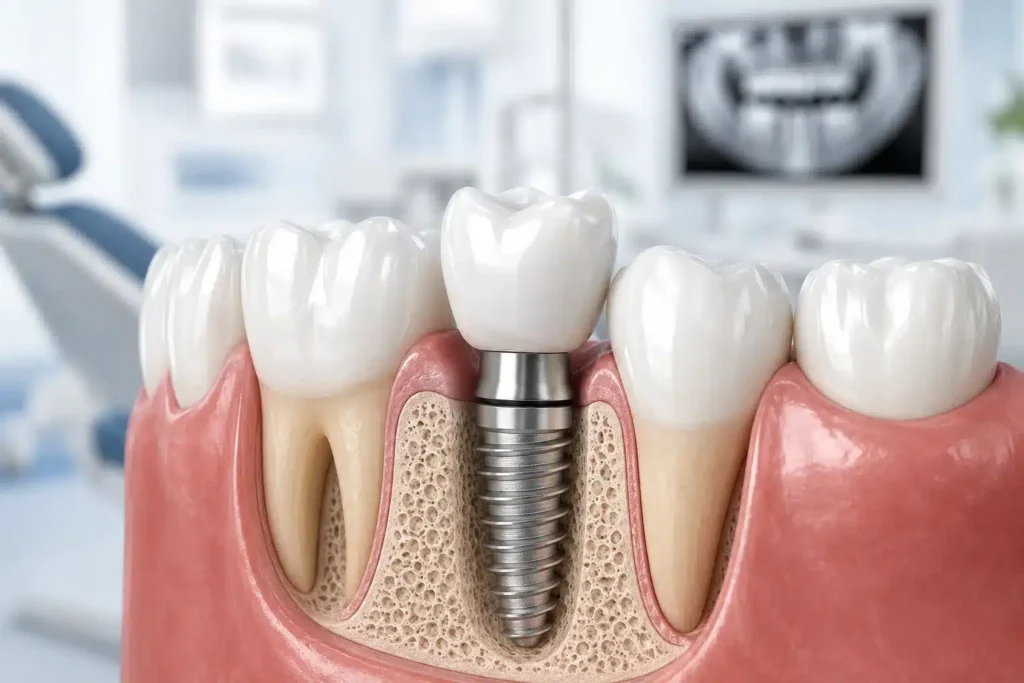
A dental implant is a small titanium post placed into the jawbone, where it acts as an artificial tooth root. A crown is then fitted on top to do the work of the tooth. The post replaces the root, and the crown replaces the part you can see.
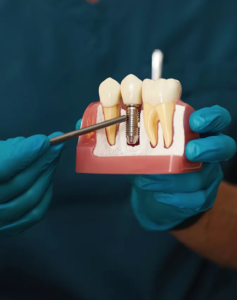
Three parts make up an implant:
- The implant is the titanium post in the bone.
- The abutment is the connector that sits on top of it, at gum level.
- The crown is the replacement tooth, which attaches to the abutment.
Most people assume an implant is all one piece. It isn’t, and that matters later on, because the post and the crown don’t last the same length of time.
What holds an implant in place is osseointegration, which is a fancy word for bone growing directly onto the implant surface (usually titanium or titanium alloy, but can also be zirconia) and locking it in. Your jaw essentially accepts it as its own, and that’s also why the healing period can’t be shortened.
An implant doesn’t touch the teeth on either side. A bridge is carried by those neighbouring teeth, and they have to be cut down to hold it. An implant stands on its own.
How to Know If You Are a Candidate for Implants
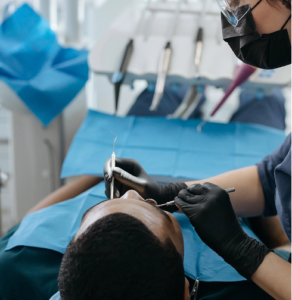
If you have a missing tooth, a tooth that can’t be saved, or dentures that won’t stay put, there’s a good chance you’re a candidate. The main requirement is enough healthy jawbone to hold the implant, along with healthy gums. Beyond that, everyone is assessed individually.
Most people who ask us about implants are in one of three situations:
- The first is a single missing tooth where the teeth on either side are healthy. There’s no good reason to involve those teeth, and an implant would not do that.
- The second is dentures that move. A lower denture that lifts every time you chew isn’t something you just have to get used to. It’s a mechanical problem, and it has a mechanical solution.
- The third is a tooth that’s beyond saving, where it’s much easier to plan the replacement before the tooth comes out than after.
The one firm requirement is bone. An implant needs enough jawbone to hold it securely. If there isn’t enough, bone can often be built up first with a graft. That adds time and cost.
And no, you’re not too old. Age on its own isn’t a barrier, and older patients often rule themselves out for no reason. Health conditions and smoking do affect healing, but those are weighed case by case. Every individual is different and needs to be evaluated carefully.
Replacing Several Teeth or a Full Arch
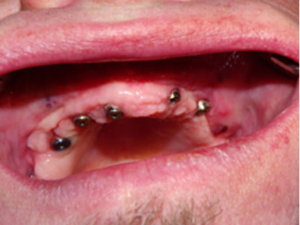
Implants don’t have to replace teeth one for one. A small number of implants can hold up a bridge that spans several teeth, so the bridge rests on implants instead of on your natural teeth. A few more can support a full arch. Four to six implants can hold an entire upper or lower set, which is usually what people mean by full mouth dental implants. It’s also what makes replacing a lot of teeth financially realistic, because you aren’t paying for one implant per tooth.
If you’re struggling with a conventional denture, implant-supported dentures solve the exact problem that makes dentures so hard to live with. A conventional denture rests on the gums and relies on suction and muscle control to stay put. Implants anchor it, so it doesn’t slide when you eat or lift when you talk.
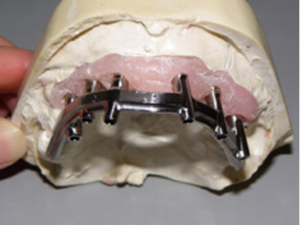
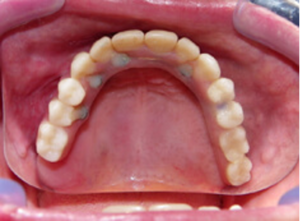
A fixed implant-supported denture goes a step further. It doesn’t move, it doesn’t come out at night for cleaning, and on an upper arch it leaves the palate uncovered.
A conventional upper denture covers the roof of your mouth, and the palate is where a great deal of taste and temperature is picked up. Cover it, and food tastes different, and your mouth feels different all day. People who have lived with a full upper denture usually notice that change before they notice anything else about the result.
How Much Do Dental Implants Cost?
There’s no single fee for a dental implant, and anyone quoting you one over the phone is guessing. The cost depends on how many implants you need, what has to happen before placement, and what goes on top. We give you a written estimate after an examination and X-rays.
Here’s what actually moves the number.
What Changes the Price of an Implant?
The first factor is how many implants you need. One tooth is a very different job from a full arch, and the cost doesn’t scale in a straight line.
The second is whether a tooth has to come out first.
The third is whether you need a bone or soft tissue graft. This is the one that tends to surprise people, because we can only confirm it after imaging.
Then there’s the crown material, which is billed separately, and whether sedation is used, which is a separate service as well.
Does the Canadian Dental Care Plan Cover Implants?
No. Dental implants aren’t among the services the Canadian Dental Care Plan (CDCP) covers. The plan is built around diagnostic, preventive, restorative and denture care, and implants fall outside of that. Please don’t plan on the CDCP paying for implant treatment.
That said, what the plan does cover still matters here. It covers examinations, X-rays, extractions and dentures, so the assessment that tells you whether implants are realistic may well be covered, even though the implant itself isn’t. You can check what applies to you on the CDCP coverage page.
Private insurance has an annual maximum, and an implant may go past it. Ask for a predetermination in writing before you start treatment.
Why an Implant Can Cost Less Over Time
A dental bridge doesn’t last forever. When it needs replacing, the two teeth holding it up get treated again, and they were already cut down the first time. Every round takes a little more of them. An implant leaves those teeth out of it entirely.
We’re not saying implants are always the cheaper option. We’re saying the first number you see isn’t the whole story.
A Note from Dr. Wong:
There is nothing better than a real tooth, so prolonging the lifespan of natural teeth should be one’s first goal. If there is no choice but to replace a tooth, then we can consider implants as the most lifelike of the options, but not necessarily always the best option. We need to weigh things like age, health, oral hygiene, space available, bone and gums available, adjacent teeth, the opposing bite, aesthetics, habits, and of course the overall cost. Careful and thoughtful evaluation is key to the long-term success of any implant.
The Five Stages of the Dental Implant Procedure
Implant treatment happens in five stages over several months, and most of that time is spent waiting for bone to heal, not sitting in our chair.
- Assessment. We examine your mouth and take X-rays to see how much bone there is, where the nerves and sinuses sit, and where the implant should go. A single tooth implant and a full arch both start here. This is also where grafting is ruled in or out, and where you get your cost estimate.
- Extraction, if the damaged tooth is still in place. Sometimes we can remove the tooth and place the implant at the same appointment. Other times the site needs to heal first.
- Placement. The implant goes into the bone under local anesthetic and is usually tucked under the gum to heal. The appointment is shorter than most people expect.
- Healing. Over roughly three to six months, bone grows onto the implant. This part can’t be rushed. The implant has to be firmly fused to the bone before it can handle the pressure of chewing.
- The crown. Once healing is confirmed, we take an impression and have a crown made to fit the implant. It’s then attached to the abutment and adjusted to your bite.
Two worries usually sit behind questions about the process: is it painful, and how long will it take?
Do Dental Implants Hurt?
The placement is done under local anesthetic, so you shouldn’t feel it happening. Most patients find it less uncomfortable than having the tooth out in the first place. Afterward, expect some swelling and tenderness for a few days, which ordinary over-the-counter pain relief usually handles.
Recovery is usually uneventful, but it helps to know what normal looks like: swelling that peaks around day two and then settles, some tenderness at the site, and a few days of chewing on the other side. Soft food helps. If the pain is getting worse after the first few days instead of steadily easing, give us a call rather than waiting it out.
If dental treatment makes you anxious, tell us at the assessment, not on the day of surgery. Sedation is available for anxious patients, and knowing ahead of time lets us plan the appointment around it.
How Long Does It Take?
Usually three to six months from implant placement to insertion of the final crown. It takes longer if a tooth has to come out and the site needs to heal first, or if you need a bone graft, which can add several months on its own. The wait is biology, not scheduling. Bone grows onto the titanium/zirconia gradually, and until that bond has formed, the implant can’t take the force of chewing. Load it too early, and you risk losing it, which turns a long treatment into an even longer one.
If it’s a tooth people can see, you can often wear a temporary tooth while the implant heals, so you won’t be walking around with a gap for months. For most people missing a front tooth, that’s the real question. Ask us about it at your assessment.
How Long Do Dental Implants Last?
Implants are designed as a long-term tooth replacement, and many last for decades with good care. The key thing to know is that the implant in the bone and the crown on top don’t last the same length of time. The crown may need replacing while the implant stays exactly where it is.
Nobody can promise you a lifetime, and you should be wary of anyone who does. What we can fairly say is that implants are among the more predictable options in dentistry when the case is planned properly and looked after.
Three things are well known to shorten an implant’s life: smoking, which affects the blood supply that healing depends on; uncontrolled diabetes, for similar reasons; and poor cleaning around the implant.
That last one catches people out. An implant can’t get a cavity, because there’s nothing there to decay. The gum and bone around it, however, can become infected, and once that bone is lost, it doesn’t come back easily. That’s why your hygiene appointments matter just as much after an implant as they did before.
Think an Implant Is Right for You? Talk to Dr. Elston Wong in Barrie
The first step is an assessment, and it doesn’t commit you to anything. We’ll examine your mouth, take X-rays to see how much bone is there, talk through which of the three options actually suits your situation, and give you a written estimate before anything is decided.
If implants aren’t the right answer for you, we’ll tell you so, explain why, and go through what would work better instead.
Dr. Elston Wong Dentistry is at 222 Mapleview Dr. W, Units 1 and 2, in Barrie. Call 705‑721‑1143 or book an assessment through our contact page to talk through dental implants and what they would involve for you. Thanks for reading!
Frequently Asked Questions
How much does a single dental implant cost?
There’s no single price. The cost depends on whether a tooth needs to come out first, whether a bone graft is required, the crown material, and whether sedation is used. We give you a written estimate after an examination and X-rays, before any treatment is agreed.
Does the Canadian Dental Care Plan cover dental implants?
No. Implants aren’t among the services the plan covers. The Canadian Dental Care Plan is built around diagnostic, preventive, restorative and denture care. Related services, such as an examination, X-rays or an extraction, may be covered even though the implant itself isn’t.
How long do dental implants last?
Implants are designed as a long-term replacement, and many last decades with good care. The crown on top has a shorter working life than the post in the bone and may need replacing while the implant stays put. Smoking, uncontrolled diabetes and poor cleaning all shorten that life.
Do dental implants hurt?
The placement is done under local anesthetic, so you shouldn’t feel it. Most patients find it less uncomfortable than the extraction that came before it. Expect some swelling and tenderness for a few days afterward, usually managed with ordinary pain relief. If you’re anxious, sedation is available.
Am I too old for dental implants?
No. Age on its own isn’t a barrier, and it’s one of the most common reasons people rule themselves out unnecessarily. Dental implants for seniors are routine. What matters is bone volume, gum health and general health, not the number on your chart.
What happens if I do not have enough bone or soft tissue?
Bone can often be built up first with a graft. It adds time and cost, but it makes implants possible where they otherwise wouldn’t be. Whether you need a graft is confirmed after imaging, not guessed at. Where grafting isn’t realistic, a bridge or denture may be the better option.
Are implants better than a bridge?
Not always. An implant leaves the neighbouring teeth untouched, while a bridge means cutting down the healthy teeth on either side to carry it. On the other hand, a bridge is quicker, needs no healing period, and is sometimes the right answer, particularly if those teeth need crowns anyway. For people whose health conditions rule out implants, or for very young people who are too young for implants, bridges remain a great option.