



Fillings at Dr. Elston Wong Dentistry
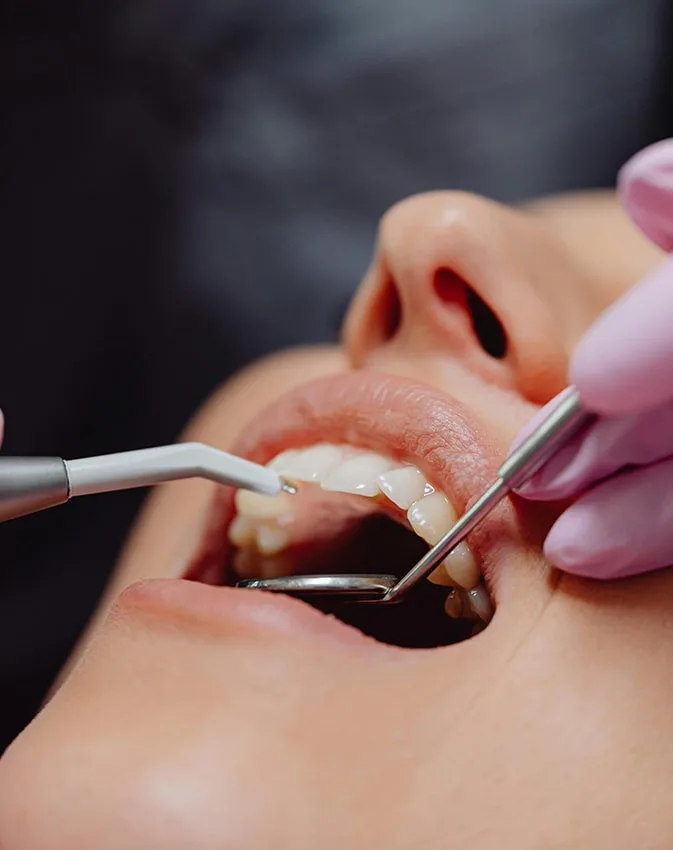

A new world of beautiful same-day solutions
Fillings, also known as direct restorations, are one of the most common procedures done in our office. When there is mild to moderate damage to a tooth, possibly from decay or fracture, an artificial filling material can be used to repair the defect.
Dental filling treatment helps restore the tooth’s function, appearance, and strength while preventing further damage.
In the past, silver (amalgam) fillings were the most commonly used material, but white fillings now dominate the landscape as the material of choice. While there has not been any real change to amalgam fillings in decades, there are still constant improvements being made amongst the plethora of white filling options. Bonding technology, tensile and compressive strength, wear resistance, handling, polishability and shade matching are just some of the factors that go into evaluating white filling performance. Exciting, eh? We thought so too.
We have added Glass Ionomer sealants to our inventory! This class of material has been around for a long time, and has the ability to capture and release fluoride directly onto the teeth. In effect, one can think of them as a “rechargeable battery” for fluoride. When the sealants wear out (just like driveway sealant), glass ionomers leave behind a more decay-resistant tooth. This is compared to the more widely used resin sealants, which may stick better but can allow for more microleakage (and subsequent decay underneath).
Fast facts

There is no single filling material that is best for all situations.
White fillings are most commonly done, but require excellent technique for success.
Most white filling materials are hardened via high-intensity blue curing light.
We look at root causes to prevent more fillings in the future.
The process

Step One
After identification of the cavity, the decayed tooth material is removed. Most commonly this preparation is done via high and low-speed drills.

Step Two
Cleaning is done mechanically with a Prep-Start air abrasion machine, then chemically with phosphoric acid + benzalkonium chloride. Dental adhesive is applied, and must be conducted under conditions free of contamination by saliva, other fluids, and even water.

Step Three
The filling materials are inserted in small layers until full. Each layer is cured before the next is added, to allow complete curing of the material through the thickness of the tooth. When the preparation is filled, the bite is checked and the surface is polished.
Let the results speak for themselves
Looking for real life transformations? Take a look at some before and after examples.
See our other restorative
dentistry services
Try our virtual smile simulation
Fillings FAQs
Are white fillings as strong as natural teeth?
No! Nothing is as good as real tooth structure because it is hard enamel on the outside, but flexible dentin on the inside. Fillings are done when there is no other choice to repair a defect, but the best management of teeth is always to prevent damage in the first place.
What are white fillings made of?
White fillings are technically referred to as composite resins, and are a mixture of resins, fillers, photoinitiators, and pigments, all proprietary to the manufacturer. Regardless of the material, it is dispensed as a soft material into the tooth, and then polymerized (most commonly by high intensity blue light).
What is the best filling material?
This is actually an old joke. Answer: the one that your dentist is most comfortable using. What’s the one that we like using the most? This is another old joke, courtesy of Enzo Ferrari when asked which of his cars was his favourite. Reply? “The one that hasn’t been made yet.”
How long will a filling last?
This is a really difficult question to answer, because one can quote the data (approximately 76% survival after 10 years), but that is an incomplete story. We know that smaller fillings will last longer than large fillings, and fillings in clean mouths will last longer than fillings in dirty mouths. Similarly, fillings done under very strictly clean conditions will not be as susceptible to subsequent microleakage breakdown as ones that were placed in contaminated conditions. Furthermore, the data gathered about filling materials are often conducted on filling materials that are no longer even available because improved materials have come along! So the real answer is kind of murky, but the truth remains the same – they are “good enough”, but nowhere close to real teeth. Keep your OEM parts, everyone!

What Our Patients Say
See what patients in Barrie are saying about their experience with Dr. Elston Wong Dentistry.
Barrie, ON L4N 9E7