


Dental Veneers at Dr. Elston Wong Dentistry
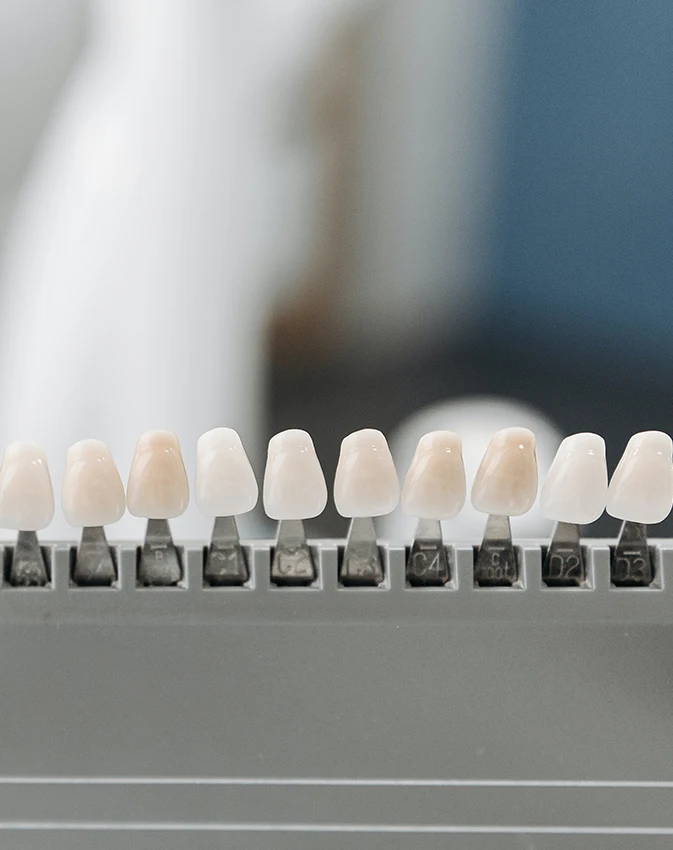

A quick and dramatic way to improve your smile with dental veneers
Veneers can be placed to correct a number of problems, from colour discrepancies, chipping, malformed teeth, to minor alignment problems. Veneers for teeth are a popular cosmetic solution for improving colour, shape, size, and minor alignment concerns. Like anything, there is a proper time and place for veneers, and they should not be placed indiscriminately.
Porcelain veneers are commonly made out of ceramics and bonded to the underlying teeth, but they can also be done as composite resin filling material when the situation is appropriate. For best long-term results, veneers are often paired with orthodontic straightening of teeth in order to avoid excessive tooth reduction or tooth thickness. The point is to improve your looks while causing the least possible damage to your teeth, a welcome departure from the 90’s trend of “instant orthodontics” where teeth were drilled down carelessly and the subsequent dentistry failed much earlier than anticipated.
Fast facts

Veneers are extremely thin, which means minimal tooth material is removed to make room.
Porcelain veneers gain their strength by bonding to the underlying tooth, just like natural enamel!
Sometimes orthodontics are done in combination with veneers for best outcomes.
When done properly, veneers are one of the longest-lasting restorations that dentistry has to offer.
The process for porcelain veneers

Step One
Before anything is started, a simulated veneer outcome is created by a dental laboratory. A blueprint for how you would like the teeth to look is created.

Step Two
The teeth are carefully reduced to make room for the veneers, which can be as thin as 0.3mm. Digital scans are taken and sent to the laboratory with a prescription. Temporary veneers are made to simulate the outcome and adjusted as needed.

Step Three
The veneers are cemented onto the teeth with an adhesive resin veneer cement under very strict isolation. This minimizes the chances of contamination, which in turn allows the veneer to last longer.
Let the results speak for themselves
Looking for real life transformations? Take a look at some before and after examples.
See our other smile
makeover services
Try our virtual smile simulation
Veneers FAQs
Who can get veneers?
Resin veneers are great for cases where minimal invasiveness is essential, such as in younger patients where growth and gum levels have not stabilized. Once a person reaches adulthood, porcelain veneers become an option. Ultimately, decisions are made on a case-by-case basis to determine the best fit material and design.
Why get veneers instead of bonded fillings?
When fractures or discolourations become too large, sometimes the only solution is a veneer that can cover up a larger surface. In the case of porcelain veneers, they are more stain-resistant over time and as such would be better for the person wanting the ultimate in aesthetics.
Are veneers painful?
Generally veneers are done with minimal local anesthetic, so no! The goal is to be as minimally invasive and preserve natural tooth structure, so veneers are often kept within the enamel of teeth. This means no sensitivity at all, and a stronger long-term bond!
How long do veneers last?
Since veneers are largely bonded to enamel (the strongest bond in dentistry), their survival is great! Data suggests a 10-year survival of about 95%, but that’s dependent on proper case selection, preparation design, and cementation conditions. We make sure a thorough discussion about expectations is had before proceeding.
What are veneers made of?
Veneers can be made of porcelain (longer lasting, more stain resistant, often more aesthetic, but usually require some degree of tooth reduction), or composite resin (aka filling material – more conservative, more easily repairable)

What Our Patients Say
See what patients in Barrie are saying about their experience with Dr. Elston Wong Dentistry.
Barrie, ON L4N 9E7